


CMCR Hosts Book Talk on Combating Democratic Polarisation
Hong Kong, 12 February 2026 — The Centre for Media and Communication Research at the School of Communication, Hong Kong Baptist University (HKBU), in collaboration with the Faculty of Arts and Social Sciences and the David C. Lam Institute for East-West Studies (LEWI), hosted a book talk on 12 February 2026 featuring Professor Cherian George and his latest monograph, Fighting Polarisation: Shared Communicative Spaces in Divided Democracies (Polity, 2025).
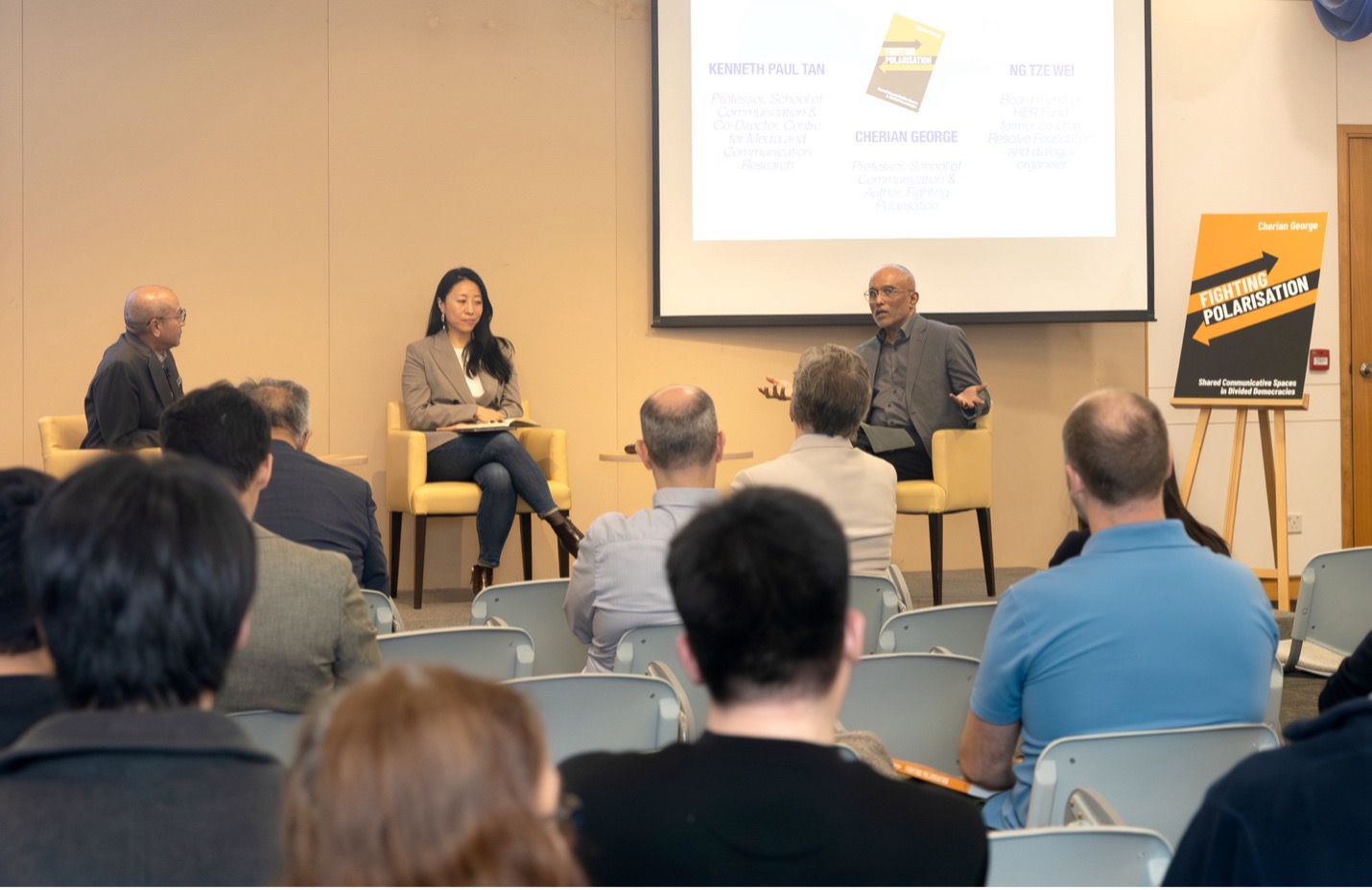
Photo by Richard Sam Dickson
In the book talk, Professor George examined the global rise of polarisation and challenged the assumption that “us-versus-them” antagonism is inevitable in democratic societies. Drawing on multi-sectoral case studies from the United States, India, Indonesia, New Zealand, Türkiye, South Africa, and Europe, he highlighted grassroots initiatives that create “shared communicative spaces” where citizens can practise reciprocal respect across deep differences.
Professor George argued that effective responses to polarisation are not limited to elite negotiations or institutional reforms. Instead, they require intentional, face-to-face dialogue designed to foster understanding rather than immediate consensus. Referencing citizens’ assemblies, interfaith peacebuilding, media reform initiatives, and community-based reconciliation projects, he underscored that such efforts aim to lower social temperatures while preserving legitimate political disagreement.
The talk concluded with a discussion featuring Ng Tze Wei (Board Member, HER Fund; former Co-Chair, Resolve Foundation) and Kenneth Paul Tan (Professor, HKBU School of Communication). The conversation reflected on the applicability of these global experiences to Hong Kong’s own social divisions, particularly in the aftermath of recent political tensions.
Professor George, a Professor of Media Studies at HKBU, is widely recognised for his scholarship on media freedom, censorship, and hate propaganda
His new book contributes to ongoing debates within academia, journalism, and civil society about safeguarding democratic culture under conditions of intensifying polarisation.
The event attracted participants from the academic community, media professionals, students, and members of the public, underscoring the continued relevance of dialogue-based approaches to democratic resilience.
Comments are closed, but trackbacks and pingbacks are open.